Nvidia Plans $3 Billion Meta Investment as Muse AI Deal Expands
-

- by THEFLGHT,
- October 30, 2026
- in Artificial-Intelligence
Nvidia’s $3 billion Meta investment is part of a wider agreement to improve Meta’s Muse AI models and agents. The companies announced the planned equity investment on October 27, 2026, alongside work on computing infrastructure, model performance and the cost of running AI agents.
The announcement adds a financial commitment to an existing technology relationship. Nvidia said it will invest in Meta’s equity offering; neither company described the investment as already completed. The release also distinguishes agreed collaboration on Muse from additional security projects the companies are only considering.
Nvidia’s $3 Billion Meta Investment Accompanies Muse Deal
Nvidia’s October 27 announcement says the companies will expand their work on Muse and its family of models. They plan to optimize training and inference workflows, with the stated aim of improving performance and total cost of ownership.
Nvidia also said it will invest $3 billion in Meta’s equity offering. The release did not disclose the number of shares, a purchase price, an ownership percentage or a closing date. Its forward-looking statement refers to anticipated completion and applicable closing conditions, so the announced amount should not be reported as cash already transferred.
The announcement separates three commitments from one possibility:
- Nvidia plans a $3 billion equity investment in Meta.
- The companies will expand Muse model and agent optimization.
- Meta intends to expand Nvidia computing and networking deployments.
- Further OpenShell and Sentry cooperation remains under consideration.
Reuters independently reported the investment and expanded Muse partnership on October 27. It also placed the announcement in the context of Meta’s larger equity offering. The Nvidia commitment is one disclosed participant in that financing, not the total size of Meta’s capital raise.
Meta and Nvidia Target Muse Training and Inference
Muse is Meta’s personal AI agent, while the Muse family includes the models behind that product. Meta already uses Nvidia infrastructure for the system. The new collaboration focuses on tuning the interaction between models, agent workflows and underlying hardware rather than announcing an entirely new consumer assistant.
The companies say they will work across training and inference. Training builds or improves a model; inference is the computing used when people or agents run it. For an agent that may perform several tool calls and follow-up steps, inference cost can grow beyond the price of a single chat response.
Nvidia’s release says Meta’s Muse models have shown strong benchmarks and growing downloads, but it does not provide a reproducible methodology or exact figures for those claims. The partnership itself is the new, verifiable event; the claimed popularity and performance should be treated as company assertions until more data is available.
The companies have not published a schedule for the optimization work or quantified how much it could reduce Muse’s cost per completed task. Future measurements would need to account for speed, reliability and the number of tool actions an agent uses, not just tokens processed per second.
Meta Plans More Vera Rubin and Networking Capacity
Meta intends to expand deployment of Nvidia’s Vera Rubin infrastructure and Vera CPUs for next-generation agents. It also plans to deploy Spectrum-X Ethernet networking and BlueField-4 processors, according to the announcement. These components address different parts of the computing stack, from model workloads to data movement and infrastructure control.
That hardware plan is strategically important because agent services can produce unpredictable bursts of compute demand. A task may pause for a tool, resume after new information arrives and continue through several attempts. Efficient networking and coordination matter alongside the accelerator that runs the model.
The companies did not disclose the number of Rubin systems, Vera CPUs or BlueField-4 units in the planned expansion. Nor did they provide a delivery schedule or identify individual facilities. The release therefore supports a direction of investment, not a calculation of additional installed capacity.
OpenShell and Sentry Are Potential, Not Finalized, Work
Nvidia and Meta said they are considering more cooperation around Nvidia’s OpenShell Reference Architecture. Nvidia describes OpenShell as a way to contain and govern agent actions, with Sentry intended to monitor behavior. The wording is exploratory; it is not an announcement that Meta has deployed those controls across Muse.
For a personal agent connected to outside services, this distinction matters. Hardware performance can make an agent cheaper and faster, but reliability also depends on whether it stays within permissions, handles untrusted content safely and gives users meaningful control over consequential actions.
The agreement links a chipmaker’s capital, hardware and software to one of the largest potential consumer-agent platforms. It also deepens Meta’s dependence on Nvidia technology at a time when AI companies are trying to improve both model quality and the economics of serving many users.
Investors and developers will need to watch for the investment’s closing, concrete infrastructure orders and measured Muse improvements. Those disclosures would show whether the announced partnership produces lower operating costs or better agent performance. For now, the confirmed news is the planned $3 billion investment and expanded joint work.
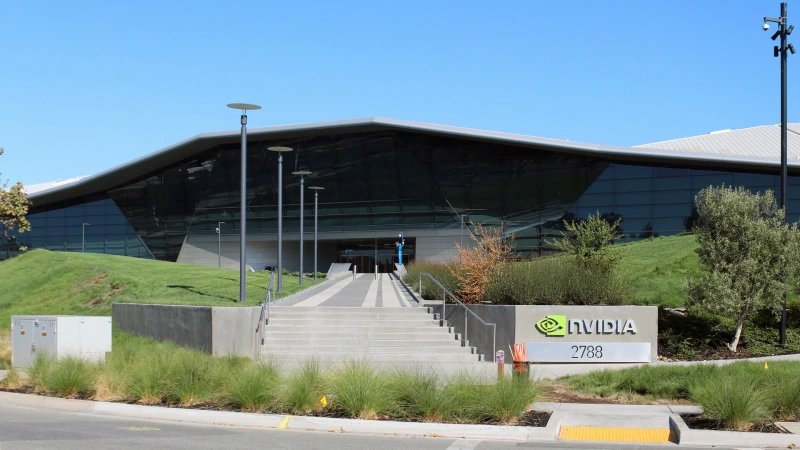
Photo: Nvidia headquarters in Santa Clara, photographed by Coolcaesar and edited by Jacek Halicki, via Wikimedia Commons. Further cropped; licensed under CC BY-SA 4.0. The image does not depict the October 27 announcement.




0 Comments:
Leave a Reply