CrowdStrike AI Kill Switch Launches in Falcon Guardian
-

- by THEFLGHT,
- November 04, 2026
- in Artificial-Intelligence
CrowdStrike AI Kill Switch is now available in Falcon Guardian, giving security teams a manual way to cut an agent off from the AI models that drive its decisions. CrowdStrike announced the control on November 3 at Fal.Con Europe 2026 in Barcelona.
The launch responds to a practical problem created by autonomous software: an agent can chain together tools, credentials and applications faster than a human can investigate each action. CrowdStrike is positioning the switch as an emergency brake, while acknowledging that several forms of deeper containment are still on its roadmap.
The release separates three layers of control:
- Gateway enforcement that blocks an agent's access to AI models.
- Falcon Guardian monitoring of prompts, traffic and endpoint activity.
- Planned containment across endpoints, identities, cloud services and browsers.
How the CrowdStrike AI Kill Switch Works
An authorized administrator activates the switch in Falcon Guardian. The command directs connected AI gateways to block the targeted agent's access to the models it relies on, interrupting the reasoning loop that would otherwise let it choose and execute further actions.
CrowdStrike's technical explanation says the control can use Falcon AI Gateway or a compatible third-party gateway. Falcon AI Gateway centralizes model access, credentials, usage policies and inspection for applications and workloads, including environments that are not directly covered by an endpoint sensor.
The company says the kill switch is available now to Falcon Guardian customers. That availability applies to gateway enforcement. Broader actions described in the launch, such as terminating a process directly on an endpoint, revoking an agent identity or ending a browser session, are planned extensions rather than capabilities buyers should assume are already deployed.
Falcon Guardian records the authorized response in an audit trail. The purpose is to give a security decision-maker a documented intervention point when an agent is compromised, follows a malicious instruction or operates outside the task its owner intended.
Falcon Guardian Adds Hooks, Network Inspection and Supply-Chain Checks
The kill switch sits within a wider Falcon Guardian update. CrowdStrike says agent-level hooks can inspect prompts and enforce policy inside widely used tools including Claude Code, OpenAI Codex, GitHub Copilot, Microsoft 365 Copilot, OpenCode and Cursor.
Endpoint network inspection is generally available on Windows, with Mac support in early access. The feature pairs an agent's communications with what it does on the device, addressing the blind spots of a gateway that can see traffic but cannot observe a local action or an open-weight model running without an external connection.
The November 3 product announcement also lists detection for prompt injection and malicious instructions, discovery of risky AI skills and MCP servers, and an Anthropic integration that runs the Falcon sensor inside the Claude Cowork virtual machine.
Those controls cover different points in an agent's lifecycle. Supply-chain checks aim to prevent unsafe components from entering an environment, hooks govern an agent's instructions, network inspection watches communications and the kill switch provides a response when prevention and monitoring are no longer enough.
Background Reading
Stopping an Agent Does Not Reverse Its Earlier Actions
A kill switch limits additional activity, but it does not automatically undo work an agent has already completed. A model may have changed a file, sent data to another service, created a persistent credential or delegated a task before the administrator intervenes.
Independent reporting from Forbes highlighted that limitation. Analysts interviewed for the report said organizations still need rollback, testing, audit evidence and confirmation that links to subagents and external tools have actually been severed.
That makes detection speed and scope critical. Blocking model access may stop an agent whose next step depends on another inference request, but a process already executing locally or a downstream service operating under a separate credential may require an additional response.
Security teams should therefore treat the switch as one incident-response control, not a complete safety system. Useful deployment tests would confirm who can activate it, how quickly gateway policy propagates, whether every model route is covered, what evidence is retained and how normal work resumes after an investigation.
CrowdStrike Builds Toward Coordinated Agent Containment
CrowdStrike's roadmap describes one command coordinating enforcement across endpoint processes, cloud agents, SaaS applications, user and agent identities, and browser sessions. The company also plans to connect response decisions to Agent Graph context and Charlotte Agentic SOAR workflows.
The architecture reflects how enterprise agents differ from conventional applications. They may move between a laptop, a hosted model, a browser and several business systems during one task. Containing only one layer can leave another route open, especially when multiple agents or tools continue independently.
CrowdStrike is also expanding the surrounding portfolio through planned acquisitions of Fiddler AI and Dreadnode. Fiddler focuses on observing and explaining agent behavior, while Dreadnode tests models and agent systems for weaknesses. Those transactions remain subject to closing conditions and are separate from the kill switch available today.
The most consequential evidence will come from production use: how reliably the current gateway control identifies the correct agent, how often it interrupts legitimate work and whether upcoming enforcement points stop coordinated activity without disabling unrelated systems.
For now, the launch gives Falcon Guardian customers a defined human intervention mechanism and a clear boundary between present controls and future containment.
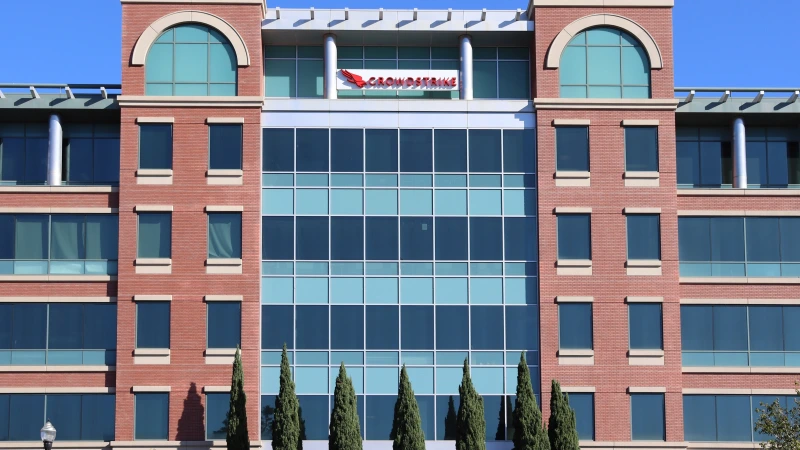
Photo: CrowdStrike's Silicon Valley branch office, photographed by Coolcaesar, via Wikimedia Commons. Licensed under CC BY 4.0. Cropped and resized to 16:9; the image does not depict the November 3 announcement.


0 Comments:
Leave a Reply