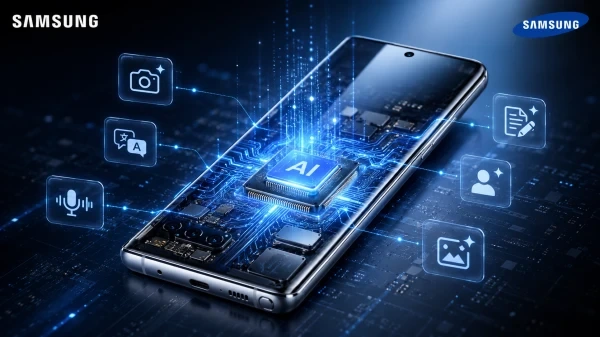
Samsung Pushes Galaxy AI Further With Smarter On-Device Intelligence
Samsung is accelerating its artificial intelligence strategy by expanding Galaxy AI, introducing more advanced on-device intelligence designed to make smartphones faster, smarter, and more useful in everyday life.
Rather than relying entirely on cloud computing, Samsung is shifting more AI processing directly onto users' devices, allowing features to operate with lower latency, stronger privacy protections, and improved performance even when internet connectivity is limited.
This approach reflects a broader industry trend as smartphone manufacturers compete to make artificial intelligence one of the defining features of next-generation mobile devices.
The latest Galaxy AI improvements extend far beyond simple voice assistants. Samsung is integrating artificial intelligence into photography, live translation, note-taking, messaging, productivity, and search.
Users can automatically summarize lengthy documents, rewrite emails in different tones, translate conversations in real time, remove unwanted objects from photos, generate intelligent image edits, and receive contextual recommendations based on how they use their devices. These capabilities are designed to reduce the number of manual steps required for everyday tasks while making smartphones more proactive and personalized.
One of Samsung's biggest priorities is expanding on-device AI. By processing more requests directly on the phone instead of sending information to external servers, users benefit from quicker responses while maintaining greater control over personal data.
This architecture is particularly valuable for sensitive information such as private conversations, documents, health records, and financial details. As consumers become increasingly concerned about digital privacy, local AI processing is emerging as a significant competitive advantage for smartphone manufacturers.
Samsung continues working closely with Google to integrate Gemini into its mobile ecosystem, combining Google's advanced AI models with Samsung's hardware and software optimizations. This partnership enables users to perform more complex tasks through natural conversations while accessing AI capabilities across multiple applications.
Whether planning trips, managing schedules, generating creative content, or searching for information, Galaxy AI is evolving into a central productivity platform rather than simply an optional smartphone feature.
Artificial intelligence is also improving photography, one of the most competitive areas of the smartphone market. AI algorithms now help optimize camera settings automatically, improve low-light images, remove reflections, enhance portraits, stabilize video, and intelligently edit photos after they have been captured.
Samsung believes AI-powered photography will continue evolving as machine learning models become more capable of understanding scenes and producing professional-quality images with minimal user effort.
The race to dominate mobile AI has intensified significantly over the past year. Apple continues expanding Apple Intelligence across its ecosystem, Google is embedding Gemini throughout Android, Microsoft is integrating Copilot into mobile productivity tools, and several Chinese smartphone manufacturers are introducing increasingly sophisticated AI features.
Rather than competing only on processors or camera hardware, smartphone companies are now differentiating themselves through the quality, speed, and usefulness of their artificial intelligence capabilities.
Industry analysts believe on-device AI will become one of the most important trends in consumer electronics over the next decade. As mobile processors become more powerful and energy efficient, smartphones will increasingly perform advanced AI tasks locally without depending entirely on cloud infrastructure.
This shift promises better privacy, faster performance, reduced operating costs, and more reliable AI experiences regardless of network conditions. Developers are also expected to create a new generation of applications specifically optimized for on-device artificial intelligence.
Samsung's continued investment in Galaxy AI demonstrates how rapidly artificial intelligence is transforming the mobile industry. Smartphones are evolving from communication devices into intelligent digital assistants capable of understanding context, anticipating user needs, and simplifying everyday activities.
As competition among global technology companies continues accelerating, AI-powered mobile experiences are expected to become one of the primary factors influencing consumer purchasing decisions and shaping the future of personal technology.







0 Comments:
Leave a Reply