Perplexity Bets on Nvidia's New Vera CPU to Power the Next Generation of AI Agents
-

- by THEFLGHT,
- July 19, 2026
- in Artificial-Intelligence
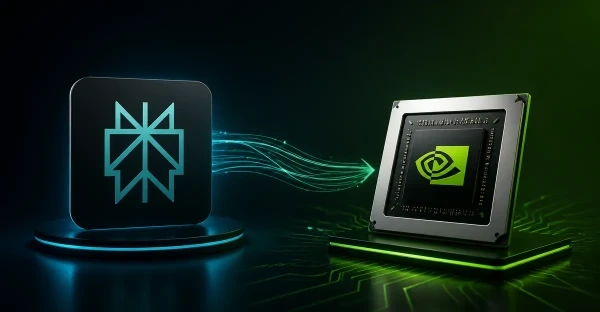
Perplexity AI has become one of the first artificial intelligence companies to publicly commit to using Nvidia's newly introduced Vera CPU, marking an important milestone in Nvidia's strategy to expand beyond graphics processors and into general-purpose computing for AI infrastructure.
While Nvidia has dominated the market for AI GPUs over the past several years, the company is now developing an entirely new family of processors designed specifically for the growing demands of AI agents and enterprise workloads. Perplexity's decision to adopt Vera demonstrates increasing confidence that the next generation of AI systems will require much more than powerful graphics chips alone.
Unlike traditional CPUs that were built primarily for web servers and business applications, Vera has been engineered with artificial intelligence in mind. AI agents can perform thousands of operations continuously without the pauses that human users naturally take, placing far greater pressure on computing infrastructure. According to Perplexity executives, Nvidia's new processor delivered noticeably better performance for AI agent coding workloads compared with conventional server CPUs, making it a strong fit for the company's rapidly growing platform.
The announcement highlights a major shift taking place across the AI industry. For years, graphics processing units handled most AI computation while central processors managed supporting tasks. As AI agents become capable of reasoning, coding, planning projects, browsing the web, and completing multi-step assignments independently, CPUs are becoming increasingly important because they coordinate many of the background operations that keep these intelligent systems running efficiently. Nvidia believes this changing workload creates a significant opportunity for its new processor architecture.
Perplexity has emerged as one of the fastest-growing AI search companies by combining conversational AI with real-time web information. Unlike traditional search engines that simply display links, Perplexity generates complete answers while citing reliable sources, making it particularly attractive for research, education, software development, and professional analysis. The company's rapid growth has dramatically increased demand for computing resources, requiring infrastructure capable of supporting millions of increasingly sophisticated AI interactions every day.
Nvidia expects its Vera CPU business to become a multibillion-dollar revenue stream over the coming years as AI companies diversify their hardware investments. The company has stated that it expects billions of dollars in annual sales from Vera as cloud providers, enterprise software companies, and AI startups begin deploying the processor inside next-generation data centers. By expanding into CPUs alongside its industry-leading AI GPUs, Nvidia is positioning itself to supply nearly every major component required for modern artificial intelligence infrastructure.
The move also reflects growing competition within the semiconductor industry. Intel and AMD have traditionally dominated the server CPU market, but artificial intelligence is rapidly changing customer priorities. Companies developing AI models increasingly want processors optimized for machine learning, autonomous agents, and advanced reasoning rather than conventional business software. Nvidia believes integrating its CPUs more closely with its AI accelerators will provide customers with a more efficient computing platform capable of handling increasingly complex AI workloads.
Industry analysts expect AI agents to become one of the fastest-growing segments of artificial intelligence over the next several years. Unlike today's chatbots, AI agents can complete long-running tasks independently, coordinate multiple tools, write and test software, analyze business data, and automate complex workflows with minimal human supervision. Supporting these capabilities requires faster communication between CPUs, GPUs, memory, and networking systems, creating strong demand for specialized infrastructure like Vera.
Perplexity's early adoption of Nvidia's new CPU demonstrates how rapidly the artificial intelligence ecosystem continues evolving. The future of AI will not depend solely on larger language models but also on the hardware powering them behind the scenes.
As companies race to build more capable AI agents, investments in advanced processors such as Nvidia's Vera are expected to play a central role in determining which platforms can deliver the speed, reliability, and scalability needed for the next generation of intelligent computing.





0 Comments:
Leave a Reply