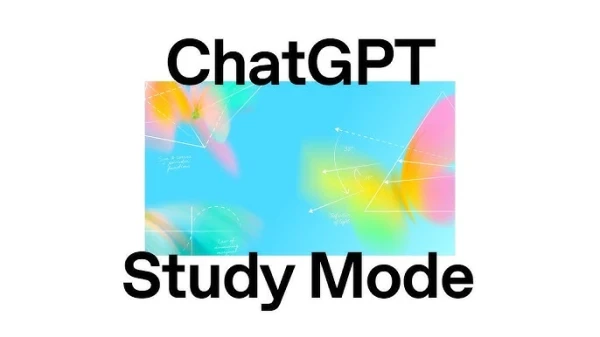
OpenAI Expands ChatGPT Study Mode With Smarter Learning Tools for Students
-

- by THEFLGHT,
- July 11, 2026
- in Artificial-Intelligence
Artificial intelligence is increasingly becoming a valuable educational companion, and OpenAI has taken another significant step by expanding ChatGPT's Study Mode with additional learning-focused capabilities.
Rather than functioning as a simple answer generator, the updated experience is designed to guide students through problems one step at a time, encouraging deeper understanding instead of memorization.
The latest improvements reflect the growing effort to position AI as a learning assistant that supports education while helping students build critical thinking and problem-solving skills.
The enhanced Study Mode focuses on interactive learning rather than delivering immediate solutions. When students ask questions, ChatGPT can break complex topics into smaller, easier-to-understand explanations while asking follow-up questions that encourage learners to think through problems independently.
This approach closely resembles the methods used by experienced tutors, allowing students to gain confidence as they work toward finding the correct answers themselves instead of relying entirely on AI-generated solutions.
The improvements cover a wide variety of academic subjects, including mathematics, science, history, programming, literature, economics, and language learning. Students can request explanations at different difficulty levels, making the feature useful for learners ranging from secondary school to university.
By adapting its responses to the user's level of understanding, the AI provides a more personalized educational experience that can support classroom learning as well as independent study.
One of the most important aspects of the updated Study Mode is its emphasis on reasoning. Instead of simply presenting the final answer to a difficult question, the AI encourages users to examine assumptions, understand formulas, identify mistakes, and develop logical thinking skills.
Educational experts have long argued that this style of learning produces better long-term retention than memorizing answers, and AI is now being designed to support that philosophy more effectively.
The new capabilities also benefit teachers and educators. Instructors can use the system to generate practice questions, explain difficult concepts in multiple ways, prepare lesson materials, and create exercises tailored to different learning levels.
Rather than replacing teachers, AI is increasingly becoming a tool that helps educators spend more time on personalized instruction while reducing repetitive administrative work.
The expansion of AI-powered education reflects a broader transformation taking place across classrooms worldwide. Universities, schools, and online learning platforms are integrating artificial intelligence into their educational systems to provide personalized tutoring, instant feedback, automated assessments, and adaptive learning experiences.
As AI technology continues to improve, many institutions see it as an opportunity to make high-quality educational support available to more students regardless of their location or financial circumstances.
At the same time, responsible use remains a central priority. OpenAI continues encouraging students to use Study Mode as a learning resource rather than a shortcut for completing assignments without understanding the material.
By focusing on explanations, guided reasoning, and interactive learning instead of direct answers, the company aims to reduce misuse while promoting genuine educational development.
The continued expansion of ChatGPT's Study Mode highlights how artificial intelligence is moving beyond productivity and automation into personalized education.
As AI becomes more capable of adapting to individual learning styles, it has the potential to transform how students study, how teachers teach, and how educational resources are delivered around the world.
While AI will never replace the value of skilled educators, it is quickly becoming one of the most powerful tools available to support learning in the digital age.





0 Comments:
Leave a Reply