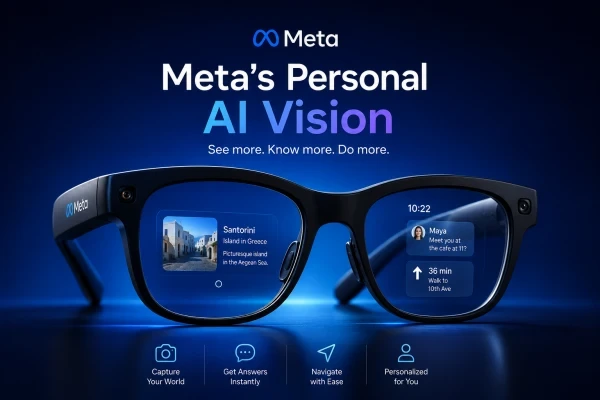
Meta's Personal AI Vision Could Change How Billions Use Artificial Intelligence
-

- by THEFLGHT,
- July 30, 2026
- in Artificial-Intelligence
Meta is making one of its biggest artificial intelligence bets yet by focusing on personal AI assistants that are designed to help users throughout their daily lives. Instead of building AI primarily for programmers or large enterprises, the company wants to create intelligent digital companions capable of understanding individual goals, preferences, and routines.
According to Meta CEO Mark Zuckerberg, the next generation of AI will do much more than answer questions—it will actively help people improve productivity, manage finances, stay healthy, learn new skills, and organize everyday tasks.
The vision represents a major shift in how artificial intelligence is being developed. Early AI assistants were mainly conversational tools that generated text or answered simple questions. Meta believes future AI systems will become proactive partners capable of reminding users about important deadlines, planning travel, recommending educational content, helping with shopping decisions, managing schedules, and even providing personalized coaching based on long-term goals. These capabilities could fundamentally change how people interact with smartphones, wearable devices, and future augmented reality products.
Meta is integrating its AI strategy across Facebook, Instagram, Messenger, WhatsApp, and its growing portfolio of wearable devices. The company believes billions of existing users provide a unique opportunity to introduce AI into everyday communication without requiring people to adopt entirely new platforms. Users may soon interact with AI assistants directly inside messaging apps, social feeds, and smart glasses, creating a more seamless digital experience across Meta's ecosystem.
Businesses are also expected to benefit from the company's AI investments. Meta says more than one million businesses already use its AI-powered tools each week across WhatsApp, Messenger, and Instagram to communicate with customers, answer questions, and improve sales. Future AI assistants are expected to automate customer service, recommend marketing strategies, generate content, and provide personalized support that helps businesses operate more efficiently while improving customer engagement.
Competition in the personal AI market is becoming increasingly intense. OpenAI continues expanding ChatGPT into a broader digital assistant, Google is embedding Gemini throughout Android and Workspace, Microsoft is integrating Copilot across Windows and Microsoft 365, while Apple continues enhancing Apple Intelligence across its ecosystem. Rather than competing only on model intelligence, companies are racing to become the primary AI assistant that users rely on throughout the day.
Delivering highly personalized AI also introduces significant privacy challenges. Personal assistants require access to calendars, messages, contacts, documents, browsing activity, and other sensitive information to provide meaningful recommendations. Meta says building user trust will be essential as AI becomes more deeply integrated into daily life. The company will need to demonstrate strong privacy controls, transparent data practices, and secure AI systems if it hopes to convince billions of users to rely on personal AI assistants.
Behind Meta's ambitious plans is an enormous investment in AI infrastructure. The company continues spending billions of dollars on advanced data centers, custom AI chips, and research talent to support increasingly powerful AI models. These investments are intended to ensure that Meta can compete with OpenAI, Google DeepMind, Anthropic, Microsoft, and xAI as demand for intelligent AI assistants continues growing across both consumer and enterprise markets.
Industry analysts believe personal AI assistants could become the next major computing platform after smartphones. Instead of manually searching for information or switching between dozens of applications, users may increasingly rely on AI that understands context, anticipates needs, and performs tasks automatically.
If Meta succeeds in delivering this vision, personal AI could redefine how billions of people interact with technology over the next decade, making artificial intelligence an always-available partner in everyday life.





0 Comments:
Leave a Reply