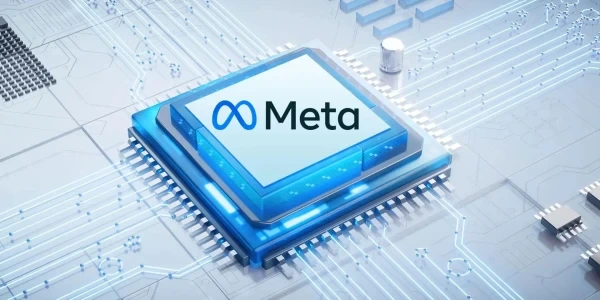
Meta's Secret 'Iris' AI Chip Could Be the Biggest Threat Yet to Nvidia's Dominance
-

- by THEFLGHT,
- July 13, 2026
- in Artificial-Intelligence
Meta is making one of the biggest bets in artificial intelligence hardware with the upcoming production of its custom-designed AI processor known internally as Iris.
The company plans to begin manufacturing the chip in September, marking a significant milestone in its effort to build a complete AI ecosystem that extends beyond software and into the hardware powering next-generation artificial intelligence.
Rather than depending entirely on external suppliers, Meta wants greater control over the processors that train and run its increasingly sophisticated AI models.
The announcement underscores how the global AI race is shifting from building better models to owning the infrastructure required to support them.
For years, Nvidia has dominated the market for AI accelerators, supplying the GPUs that power systems developed by companies including OpenAI, Anthropic, Microsoft, Google, Amazon, and Meta itself.
Demand for these processors has reached unprecedented levels as organizations race to deploy increasingly capable AI models.
However, limited supply, rising prices, and growing competition for advanced chips have encouraged several technology giants to pursue their own silicon strategies.
Meta's Iris project represents one of the most ambitious attempts yet to reduce dependence on Nvidia while improving long-term efficiency and lowering infrastructure costs.
The Iris chip is part of Meta's broader Meta Training and Inference Accelerator program, commonly known as MTIA. According to internal plans, the company intends to release new generations of custom AI processors approximately every six months through 2027.
This rapid development cycle is designed to keep pace with the extraordinary growth in AI workloads while allowing Meta to optimize hardware specifically for its own products.
Unlike general-purpose AI processors built for thousands of customers, Meta's custom silicon can be engineered to support recommendation systems, generative AI assistants, advertising platforms, content ranking, and future autonomous AI agents across Facebook, Instagram, WhatsApp, and other services.
Meta's infrastructure ambitions extend far beyond chip development. The company expects to invest as much as $145 billion in AI infrastructure this year while expanding computing capacity to approximately 14 gigawatts by 2027.
That investment includes new data centers, networking equipment, memory systems, storage infrastructure, and long-term supply agreements with hardware manufacturers to ensure sufficient capacity for future AI growth.
Such spending highlights the enormous financial commitment required to remain competitive in frontier artificial intelligence, where computing power has become just as important as breakthroughs in machine learning research.
The move also reflects a broader industry trend. Google has long relied on its Tensor Processing Units, Amazon continues expanding Trainium and Inferentia, Microsoft is developing custom AI hardware for Azure, and several other technology companies are investing heavily in proprietary processors.
Rather than competing solely through software, leading AI firms increasingly view custom silicon as a strategic advantage capable of improving performance, reducing operational costs, and ensuring reliable access to computing resources. Control over both hardware and software is becoming one of the defining characteristics of AI leadership.
Although Meta's custom processors are not expected to replace Nvidia overnight, they could gradually reduce the company's dependence on third-party GPUs for certain workloads.
Analysts believe the strategy will initially focus on inference—the process of running trained AI models efficiently at massive scale—before expanding into AI training as future chip generations become more powerful.
If successful, Meta could significantly lower its infrastructure expenses while improving the performance of AI products used by billions of people worldwide.
Investors are watching Meta's AI hardware strategy closely because it may influence the future balance of power within the semiconductor industry.
Nvidia remains the clear market leader, but increasing adoption of custom processors by major technology companies suggests that AI infrastructure is entering a more competitive phase.
Companies capable of designing optimized hardware for their own AI ecosystems could gain meaningful cost advantages while accelerating innovation across their platforms.
Meta's decision to move Iris into production demonstrates that the future of artificial intelligence will depend on far more than increasingly capable language models. Success will also require enormous investments in chips, data centers, energy, networking, and specialized infrastructure capable of supporting billions of AI interactions every day.
As the AI race continues to intensify, ownership of the underlying hardware may prove just as valuable as the software running on top of it, making Meta's Iris project one of the most important developments in artificial intelligence this year.






0 Comments:
Leave a Reply