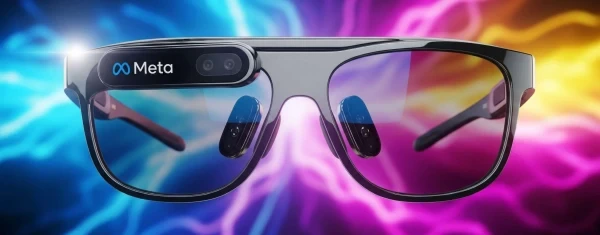
Meta Doubles Down on AI Wearables as Smart Glasses Race Heats Up
-

- by THEFLGHT,
- July 26, 2026
- in Artificial-Intelligence
Meta is significantly expanding its artificial intelligence strategy by investing heavily in AI-powered wearable devices, signaling that the company believes the next major shift in personal computing will happen beyond smartphones.
Smart glasses have become a central part of Meta's long-term vision, combining advanced AI assistants, cameras, voice recognition, and real-time information into lightweight wearable devices designed for everyday use. As competition among the world's biggest technology companies intensifies, Meta is positioning AI wearables as one of the most important products in its future hardware portfolio.
The company's latest developments build on the growing popularity of its AI-enabled smart glasses, which already allow users to capture photos and videos, listen to music, make calls, and interact with Meta AI using natural voice commands. Future versions are expected to introduce even more advanced artificial intelligence capabilities, including live language translation, object recognition, navigation assistance, contextual recommendations, and visual search. These features could allow users to receive useful information simply by looking at objects or asking questions while on the move.
Meta believes wearable AI offers a more natural way for people to interact with technology. Instead of constantly reaching for a smartphone, users can speak to an intelligent assistant that understands their surroundings and responds instantly. Advances in multimodal AI allow these devices to combine voice, images, and environmental awareness, making interactions faster and more intuitive. This vision represents a significant departure from traditional mobile computing and could reshape how consumers access digital information in their daily lives.
Competition in the wearable AI market is becoming increasingly intense. Apple continues developing Apple Intelligence across its ecosystem while reportedly exploring future wearable technologies. Google is integrating Gemini into Android devices and next-generation smart glasses, while OpenAI has entered the hardware market through its partnership with legendary designer Jony Ive.
Amazon is also rebuilding Alexa with generative AI, and several startups are developing AI-first wearable devices aimed at creating more personalized digital experiences. The race to define the future of AI hardware is now one of the technology industry's most closely watched battles.
Artificial intelligence plays a crucial role in making these devices practical. Modern AI models can process spoken language, identify landmarks, recognize objects, summarize information, answer complex questions, and adapt responses based on context. As models become more efficient, more processing can occur directly on wearable devices, improving response times while reducing dependence on cloud computing. This combination of powerful AI and lightweight hardware is making smart glasses increasingly capable of performing tasks that once required smartphones or laptops.
Industry analysts believe AI wearables could become one of the fastest-growing segments of consumer technology over the next decade. As battery life improves, processors become more efficient, and AI models continue advancing, wearable devices are expected to handle a wider range of everyday activities. Businesses are also exploring enterprise applications, including remote technical support, warehouse management, healthcare assistance, field engineering, and industrial training, where hands-free access to AI could significantly improve productivity.
Meta's investment in AI wearables is part of a broader strategy to integrate artificial intelligence across all of its products and services. The company continues enhancing Meta AI while expanding AI capabilities across Facebook, Instagram, WhatsApp, Messenger, and its virtual and augmented reality platforms. By connecting software, hardware, and intelligent assistants, Meta aims to build a unified AI ecosystem that keeps users engaged across multiple devices and experiences.
The rapid evolution of AI-powered wearables demonstrates that the future of artificial intelligence extends far beyond chatbots and desktop applications. Smart glasses equipped with advanced AI could fundamentally change how people communicate, work, travel, learn, and access information throughout the day.
As Meta accelerates development and rivals continue introducing competing products, wearable artificial intelligence is emerging as one of the most important frontiers in the global technology industry.






0 Comments:
Leave a Reply