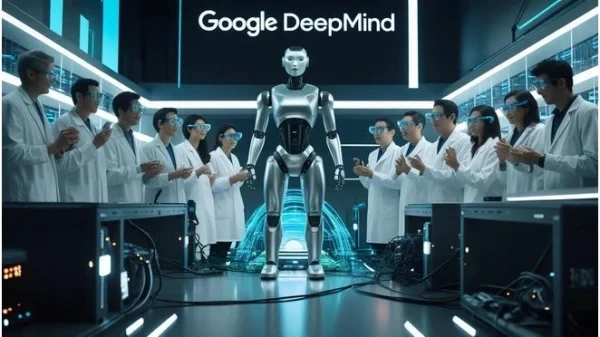
Google DeepMind Pushes Gemini Beyond Chatbots With Smarter AI Robotics
-

- by THEFLGHT,
- July 27, 2026
- in Artificial-Intelligence
Google DeepMind is accelerating its push into robotics by expanding the capabilities of its Gemini artificial intelligence models beyond digital assistants and search applications. The company is developing AI systems capable of understanding the physical world, allowing robots to interpret their surroundings, reason through complex situations, and perform tasks that previously required direct human control. This marks another major step in Google's broader strategy to make artificial intelligence useful not only on screens but also in homes, factories, warehouses, hospitals, and research laboratories.
Unlike traditional industrial robots that follow fixed instructions, Gemini-powered robotics systems are designed to adapt to changing environments. By combining computer vision, natural language understanding, and advanced reasoning, these robots can recognize objects, understand spoken commands, plan sequences of actions, and respond intelligently when conditions change. Instead of simply repeating programmed movements, they can analyze situations in real time and make decisions based on the information they observe. This flexibility has become one of the defining goals of modern robotics research.
One of the biggest advantages of integrating Gemini into robotics is multimodal intelligence. The AI can process text, images, voice, and environmental data simultaneously, giving robots a more complete understanding of the world around them. For example, a warehouse robot can identify packages, understand verbal instructions from employees, navigate around unexpected obstacles, and adjust its route without requiring manual reprogramming. Similar capabilities could improve service robots in hospitals, manufacturing plants, retail stores, and logistics centers where environments constantly change.
Google believes intelligent robotics could significantly improve productivity across numerous industries. Manufacturing companies continue facing labor shortages while global demand for automation grows. AI-powered robots capable of learning new tasks more quickly could help businesses reduce repetitive work, improve safety, and increase operational efficiency. Warehouses, distribution centers, and factories are expected to be among the earliest adopters because they involve large numbers of repetitive physical processes that can benefit from adaptive AI systems.
The healthcare sector also presents significant opportunities for advanced robotics. AI-powered machines may eventually assist medical professionals by transporting supplies, preparing equipment, supporting rehabilitation programs, and helping hospitals manage routine operational tasks. While human expertise will remain essential, intelligent robotic assistants could reduce administrative burdens and allow healthcare workers to spend more time focusing on patient care.
Competition in AI robotics is becoming increasingly intense. Companies including Tesla, Nvidia, Figure AI, Boston Dynamics, Agility Robotics, and several emerging startups are investing billions of dollars to build intelligent machines capable of performing useful physical work. Advances in foundation models like Gemini are accelerating this progress by giving robots stronger reasoning abilities rather than limiting them to narrowly programmed behaviors. As AI models continue improving, robotics developers expect machines to become increasingly versatile across both industrial and consumer applications.
Google's investment also reflects a broader shift occurring throughout the artificial intelligence industry. Frontier AI models are no longer being developed solely for chatbots or content generation. Researchers are now adapting them for autonomous vehicles, scientific research, cybersecurity, software engineering, robotics, and intelligent agents capable of interacting with both digital and physical environments. This expansion demonstrates how rapidly artificial intelligence is becoming a foundational technology that extends well beyond conversational interfaces.
Although widespread deployment of highly capable robots will take time, industry analysts believe the technology is advancing faster than many anticipated. Improvements in AI reasoning, perception, computing power, and robotics hardware are allowing machines to perform increasingly sophisticated tasks with greater reliability. As businesses continue investing in automation to improve efficiency and address workforce challenges, demand for intelligent robotic systems is expected to grow significantly over the coming years.
Google DeepMind's continued investment in Gemini-powered robotics highlights the next phase of artificial intelligence development. By combining advanced reasoning with physical machines, the company is helping shape a future where AI not only understands information but also interacts with the real world. If current progress continues, intelligent robotics could become one of the most transformative applications of artificial intelligence, reshaping industries and redefining how humans collaborate with machines.






0 Comments:
Leave a Reply