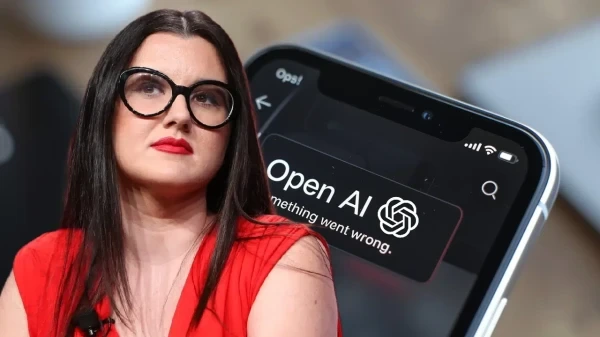
Why Fidji Simo's Departure as OpenAI's No. 2 Executive Is a Bigger Deal Than It Appears
-

- by THEFLGHT,
- July 13, 2026
- in Artificial-Intelligence
OpenAI is once again undergoing a significant leadership transition following the announcement that Fidji Simo, widely regarded as the company's second-highest-ranking executive, will step down from her full-time position and transition into a part-time advisory role.
While the decision was driven by ongoing health challenges rather than business disagreements, the timing has attracted considerable attention across the technology industry because it comes during one of the most important periods in OpenAI's history.
The company is rapidly expanding its enterprise business, investing billions of dollars in artificial intelligence infrastructure, and preparing for what many analysts believe could eventually become one of the biggest public offerings in the technology sector.
Fidji Simo joined OpenAI after building an impressive career in Silicon Valley. Before arriving at the AI company, she spent more than a decade at Meta, where she helped lead the Facebook app and played a major role in developing products such as Facebook Live, Marketplace, and the platform's advertising business.
She later became Chief Executive Officer of Instacart, successfully leading the grocery delivery company through its initial public offering before accepting Sam Altman's invitation to help oversee OpenAI's rapidly growing commercial operations.
Her appointment was viewed as a major signal that OpenAI intended to transform itself from a research-focused organization into a global technology company serving hundreds of millions of users.
During her time at OpenAI, Simo oversaw product development, business strategy, engineering, marketing, finance, policy, legal operations, and many of the teams responsible for bringing OpenAI's technologies to consumers and enterprise customers.
She played an important role in expanding ChatGPT beyond a simple conversational assistant into a platform supporting businesses, developers, healthcare initiatives, and productivity tools.
Under her leadership, OpenAI accelerated efforts to commercialize its technology while continuing to invest heavily in frontier AI research, positioning the company as one of the fastest-growing businesses in the artificial intelligence industry.
Simo explained that her decision to step back was not related to company strategy or internal disagreements but to complications from a chronic neuroimmune condition that has affected her health for several years.
After taking medical leave earlier this year, she determined that her recovery would require significantly more time than originally expected. Rather than attempting to balance the demands of leading one of the world's most influential AI companies with her ongoing treatment, she chose to leave her executive position while remaining involved as a strategic advisor.
In a public statement, she said the decision was extremely difficult because of her deep belief in OpenAI's mission and the importance of artificial intelligence for society's future.
Although OpenAI emphasized that the transition was carefully planned, Simo's departure adds to a growing list of executive changes that have occurred within the company over the past few years.
OpenAI has experienced several high-profile leadership departures while simultaneously expanding at an extraordinary pace.
As competition with Anthropic, Google DeepMind, Meta, Microsoft, and xAI intensifies, maintaining leadership stability has become increasingly important for investors, enterprise customers, and government partners who closely monitor the company's long-term direction.
Rather than appointing a direct replacement, OpenAI will distribute Simo's responsibilities among several senior executives. President Greg Brockman will assume greater responsibility for product management, while Chief Financial Officer Sarah Friar, Chief Strategy Officer Jason Kwon, and other senior leaders will oversee different aspects of the company's business operations.
OpenAI believes this distributed leadership structure will allow the company to continue executing its ambitious roadmap while ensuring that product development, enterprise growth, and AI deployment remain closely coordinated.
The leadership change arrives as OpenAI faces one of its most competitive environments since the launch of ChatGPT. Rival companies are introducing increasingly capable AI models, investing heavily in infrastructure, and competing aggressively for enterprise customers.
OpenAI continues expanding GPT-5.6, enterprise AI tools, developer platforms, and next-generation AI agents while preparing for future products that could reshape how businesses and consumers interact with artificial intelligence.
Strong leadership will therefore remain critical as the company balances rapid innovation with safety, regulation, and commercial growth.
For the broader AI industry, Fidji Simo's departure serves as a reminder that building the future of artificial intelligence depends not only on breakthrough technology but also on the people leading these organizations.
As OpenAI enters its next chapter, the company must continue delivering new AI innovations while navigating leadership transitions, increasing regulatory scrutiny, and fierce global competition.
Although Simo is stepping away from day-to-day management, her influence on OpenAI's transformation into one of the world's leading AI companies is likely to remain visible for years to come.





0 Comments:
Leave a Reply