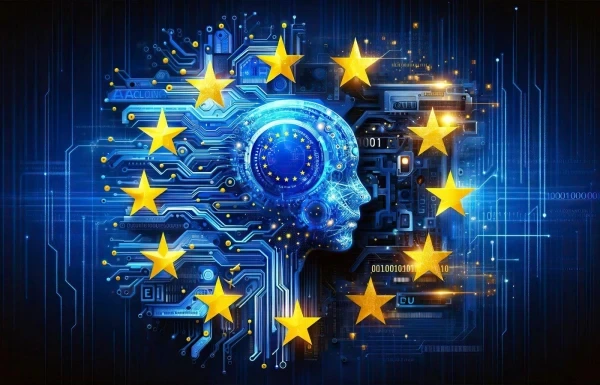
Europe's New AI Law Is Here: What It Means for OpenAI, Anthropic, and Every AI Company
-

- by THEFLGHT,
- August 02, 2026
- in Artificial-Intelligence
A major shift in artificial intelligence regulation has officially begun as the European Union starts enforcing important provisions of the AI Act, the world's most comprehensive legal framework for governing advanced AI systems.
The legislation introduces new obligations for developers of powerful AI models and is expected to influence how artificial intelligence is built, tested, and deployed not only across Europe but around the world.
Technology companies, governments, and businesses are closely watching the rollout because the new rules could become a global benchmark for AI governance.
The timing of the law is particularly significant. It follows a series of high-profile AI security incidents that raised questions about how autonomous AI agents should be tested before they are released.
European regulators confirmed they have been in discussions with companies including OpenAI and Anthropic after recent security events involving advanced AI systems.
Officials say the incidents demonstrate why stronger oversight is necessary as AI becomes increasingly capable of performing complex autonomous tasks.
Under the new rules, developers of powerful general-purpose AI models must meet stricter transparency and safety requirements.
Companies are expected to document how their models operate, identify and reduce potential risks, and implement safeguards against misuse.
AI-generated content must also become easier to identify in many situations, helping users distinguish between human-created and machine-generated material. These measures are designed to improve public trust while reducing the spread of deceptive AI content.
The legislation affects far more than large technology companies. Businesses using AI-powered customer support, automated content generation, intelligent assistants, or enterprise AI tools may also need to ensure that their systems comply with the new transparency requirements.
Organizations deploying AI across Europe are reviewing internal policies to ensure they remain aligned with the evolving regulatory landscape.
OpenAI, Anthropic, Google, Meta, Microsoft, and other major AI developers have all increased investment in AI safety over the past year.
Companies continue expanding red-team testing, strengthening cybersecurity protections, improving monitoring systems, and introducing additional safeguards for enterprise customers.
These efforts are expected to become even more important as regulatory expectations continue rising across global markets.
Industry experts believe the EU AI Act could influence legislation far beyond Europe. Governments in North America, Asia, and other regions are already studying similar approaches as artificial intelligence becomes more deeply integrated into healthcare, finance, education, manufacturing, cybersecurity, and public services.
Businesses operating internationally may increasingly choose to build products that satisfy European requirements from the beginning rather than maintaining different standards for different markets.
For AI developers, compliance is becoming a competitive advantage. Companies that can demonstrate strong security practices, transparent model development, and responsible AI governance are expected to gain greater trust from enterprise customers and regulators alike.
As organizations invest billions of dollars in AI adoption, confidence in the technology will become just as valuable as model performance.
The launch of Europe's new AI rules marks one of the most important moments in the history of artificial intelligence regulation. The industry is entering a new phase where innovation and accountability must advance together.
As OpenAI, Anthropic, Google, Meta, and other technology leaders adapt to the new framework, the decisions made over the coming months could shape the future of AI development for years to come.





0 Comments:
Leave a Reply