Apple Is Reportedly Looking to Buy an AI Chip Company to Catch Up in the Artificial Intelligence Race
-

- by THEFLGHT,
- July 16, 2026
- in Artificial-Intelligence
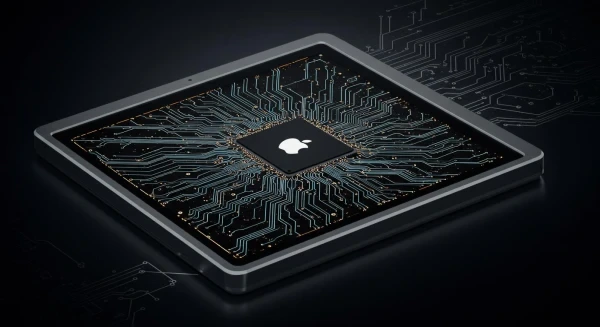
Apple is reportedly exploring the acquisition of one or more artificial intelligence chip companies as it accelerates development of its next generation of AI hardware. The move reflects the growing importance of custom processors in the global AI race, where computing power has become just as valuable as software innovation.
According to recent reports, Apple has held discussions around potential acquisitions that could strengthen its semiconductor capabilities and improve the performance of future AI-powered devices.
The reported strategy comes as competition among major technology companies continues to intensify. Microsoft, Google, Meta, Amazon, OpenAI, and xAI are investing billions of dollars in AI infrastructure, while companies such as Nvidia and AMD dominate the market for advanced AI processors.
Apple has traditionally relied on designing its own silicon for iPhones, iPads, and Macs, but the rapid evolution of generative AI has created new demand for specialized chips capable of running increasingly sophisticated AI models efficiently on consumer devices.
Unlike cloud-based AI services that depend on remote data centers, Apple has focused heavily on running AI features directly on devices. This approach improves privacy, reduces latency, and minimizes dependence on internet connectivity.
However, achieving these goals requires processors with significantly higher AI performance and energy efficiency. Acquiring an AI chip specialist could accelerate Apple's roadmap while allowing the company to compete more effectively with rivals that have invested aggressively in dedicated AI hardware over the past several years.
Industry analysts believe semiconductor expertise will become one of the most valuable assets in artificial intelligence. Every new generation of AI models demands greater processing power, more memory bandwidth, and improved energy efficiency.
Companies capable of designing chips specifically optimized for AI workloads are expected to gain significant advantages in performance, operating costs, and product differentiation. This is one reason why technology giants are investing heavily in custom silicon rather than relying entirely on third-party suppliers.
Apple's reported acquisition strategy also reflects the broader transformation taking place across the semiconductor industry. AI is driving unprecedented demand for processors used in smartphones, laptops, cloud servers, autonomous systems, robotics, and wearable devices.
As generative AI becomes integrated into everyday consumer products, hardware manufacturers are racing to develop processors capable of supporting increasingly advanced machine learning tasks without sacrificing battery life or device performance.
For consumers, stronger AI chips could enable more capable versions of Apple Intelligence across the company's ecosystem. Future devices may process larger language models locally, deliver faster AI-powered photo editing, improve voice assistants, enhance real-time translation, and support increasingly sophisticated productivity features without sending sensitive information to external servers.
These improvements align with Apple's long-standing emphasis on privacy while expanding the practical capabilities of artificial intelligence on personal devices.
The reported discussions also highlight how the AI race has expanded far beyond software.
Companies are now competing across every layer of the technology stack, including semiconductor design, networking, cloud infrastructure, operating systems, and consumer hardware. Success in artificial intelligence increasingly depends on controlling both the software and the specialized processors that power it.
As a result, acquisitions involving AI chip companies have become strategically important for some of the world's largest technology businesses.
Although Apple has not officially confirmed any acquisition plans, the reports underscore how aggressively the company is positioning itself for the next phase of artificial intelligence.
With competition accelerating across the technology industry, investments in AI hardware are expected to become just as important as breakthroughs in AI software. If Apple ultimately acquires an AI chip company, it could strengthen its ability to compete in an increasingly crowded market while laying the foundation for a new generation of intelligent devices powered by Apple-designed silicon.




0 Comments:
Leave a Reply